
2000 lumens ≈ 22 W LED / 100 W halogen / 133 W incandescent. In real life, that is bright enough to light up a kitchen counter, a two-car garage, or a medium workshop.
But here is the catch: 2000 lm does not look twice as bright as 1000 lm, and a warm-white 2000 lm bulb can feel dimmer than a daylight 2000 lm bulb even though the lumen number is identical.
Below, we explain the conversion, the science behind brightness perception, why color temperature changes the feel, and where 2000 lm actually works best.

2000 Lumens to Watts
We use the same Energy Star luminous-efficacy standard as our 1000-lumens guide: 15 lm/W for incandescent, 20 lm/W for halogen, and 90 lm/W for LED
The formula is simple: Watts = Lumens ÷ Efficacy.
To achieve 2000 lumens with an LED, a power draw of approximately 22 watts is required. This is double the 11 watts needed for 1000 lumens, assuming the same luminous efficacy.
Incandescent
Efficacy: 15 lm/W
Watts for 2000 lm: ~133 W
Halogen
Efficacy: 20 lm/W
Watts for 2000 lm: ~100 W
LED
Efficacy: 90 lm/W
Watts for 2000 lm: ~22 W
2000 Lumens: What You Actually See vs What the Box Says
The lumen number on the box measures total light output. It does not measure how bright the light feels to you. A 2000 lm LED panel blasting straight down from a 3-meter ceiling looks very different from a 2000 lm bare bulb in a shaded fixture.
What matters for perception: beam direction, distance, and surfaces. A narrow beam puts more lumens where you are looking, distance divides lux by four when doubled, and dark walls swallow light while white walls bounce it back.
So 2000 lm is a useful benchmark, but it is not the whole story.
Why 2000 Lumens Is Not Twice as Bright as 1000
Human vision follows a roughly logarithmic curve, described by the Weber-Fechner law. Doubling lumens feels like one clear step brighter, not double. To feel “twice as bright,” you often need the lumens of 8–10 times .
Upgrading from 1000 lm to 2000 lm gives a noticeable but not dramatic boost. For a dramatic change, jump to 3000–4000 lm or improve fixture placement and surface reflectance.

Measured light output
How bright your eyes read it
Brightness perception follows a square-root curve. Tripling lumens from 1000 to 3000 makes the light only about 1.7x brighter to your eyes.
2000 Lumens at 2700K vs 5000K: Same Number, Different Feel
Two bulbs can both say 2000 lm and feel completely different. Warm white (2700 K) feels cozy but 10–15% dimmer; daylight (5000 K) feels crisp and 10–20% brighter because blue-toned light activates the eye’s brightness receptors more strongly.
Higher CRI (90+) also makes the same lumen count feel more usable because colors look clearer.

1000 vs 2000 vs 3000 Lumens: A Side-by-Side Look
Use this when you are deciding which brightness tier to buy.
Want to see other lumens guides? Click 200 Lumens, 300 Lumens, 400 Lumens, 500 Lumens, 700 Lumens.
| Feature | 1000 lm | 2000 lm | 3000 lm |
|---|---|---|---|
| LED watts (90 lm/W) | 11 W | 22 W | 33 W |
| Halogen / incandescent equivalent | 50 / 67 W | 100 / 133 W | 150 / 200 W |
| Perceived brightness | Baseline | ~1 step brighter | ~1.5–2 steps brighter |
| Best single-room use | Bedrooms, accent lighting | Kitchens, garages, workshops, outdoor | Large workshops, basements, high ceilings |
| Estimated energy cost (5 hrs/day, $0.17/kWh) | ~$0.28/month | ~$0.56/month | ~$0.84/month |
| Buy if… | You want soft ambient light | You want clear task lighting | You need to fill a large or dark space |
Choosing the Right 2000 Lumens Light
You only remember three things:
- 2000 lm ≈ 22 W LED. Use that as your shopping filter.
- It is not twice as bright as 1000 lm. Expect one noticeable step up, not a doubling.
- Color temperature changes everything. 4000–5000 K for work; 2700–3000 K for living spaces.
Looking for a 2000 lumens LED Strip?
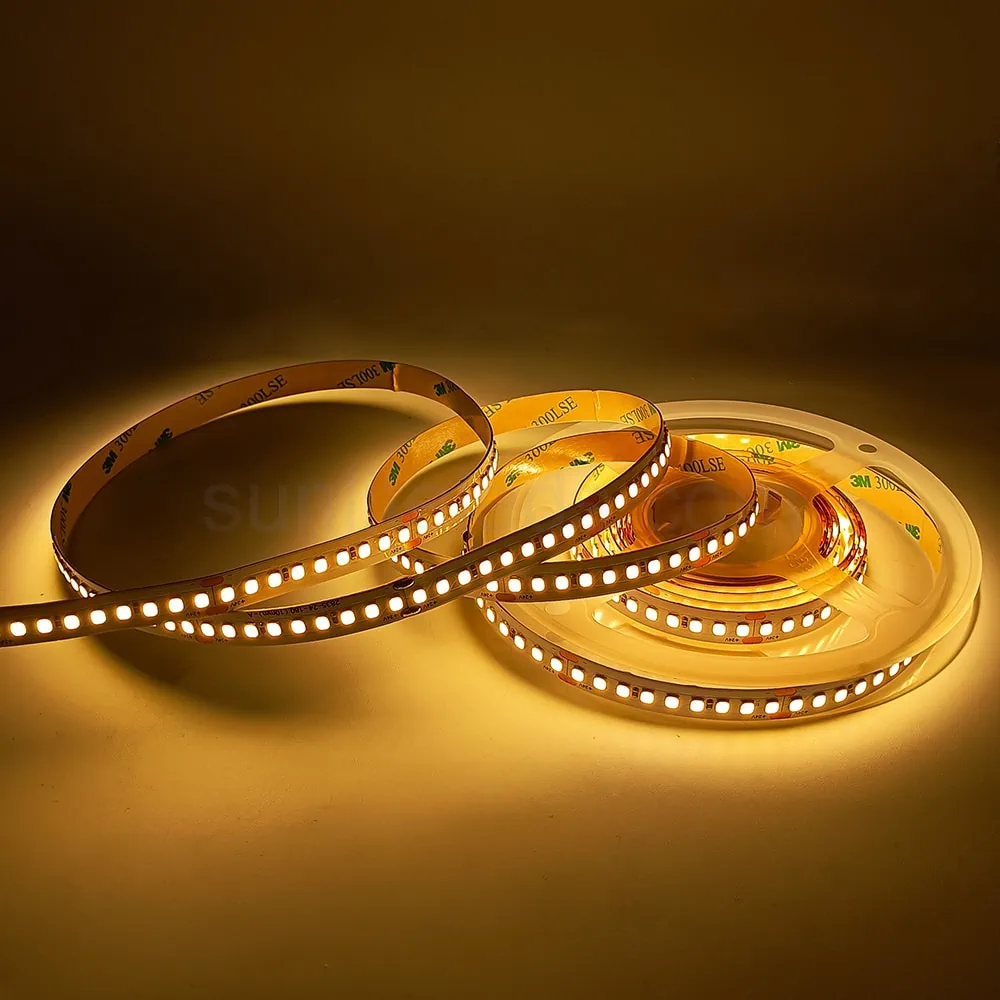
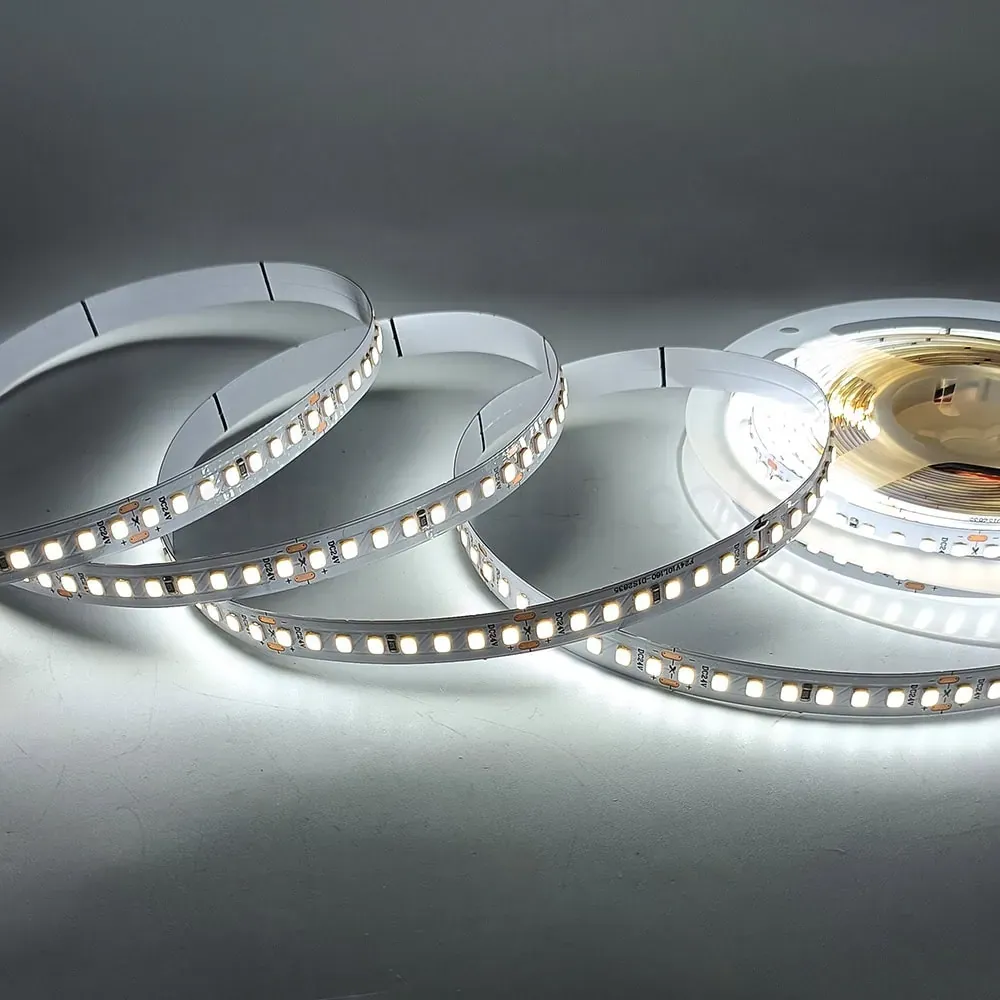
We also have high efficiency LED strips that produce a powerful light but less power if you need an LED strip that produces about 2000 lumens.
- 200lm/W 10mm 180LED 24V LED Strip — up to about 1968 lm/m at 9.6W/m, a great choice when energy efficiency matters.
- 150lm/W 10mm 160LED 24V LED Strip — 2400 lm/m at 16W/m a high-brightness option for projects that need more light output.
Need a custom LED strip for your project? Contact SuntechLite for a quote.
FAQ
1. How Much Does 2000 Lumens Cost to Run? A 2000-lumen LED typically uses about 22 watts. If you run it for 5 hours a day at $0.17/kWh, the cost is about $0.56 per month, or $6.82 per year.
Example:
22 W × 5 hours/day × 365 days = 40.15 kWh/year
40.15 kWh × $0.17 = $6.82 per year
2. Which color temperature is best for 2000 lumens? 4000–5000 K for kitchens, garages, and workshops. 2700–3000 K for living rooms and bedrooms.
3. Is 2000 lumens bright enough for a garage? Yes. One 2000 lm LED fixture is usually enough for a standard two-car garage. For a workshop area inside the garage, add task lighting over the bench.
4. Can I use 2000 lumens in a bedroom? Yes, but use 2700–3000 K and consider dimming. 2000 lm at 5000 K can feel too clinical for relaxation.
5. Does CRI matter at 2000 lumens? Yes. Higher CRI (90+) makes colors look clearer, so the same lumen output feels more usable.
6. Should I buy 2000 lm or 3000 lm? Choose 2000 lm for typical kitchens, garages, workshops. Choose 3000 lm only if the room is large, the ceilings are high, or the surfaces are dark.
